Nobody has to chase the school for an answer
The problem
A growing school was running on manual, fragmented processes. Enrolment was slow, payments were tracked by hand, and nothing connected the office to the people who depended on what it held.
There was no central channel between administrators, teachers and parents, so communication happened wherever it happened: a message here, a phone call there, a note that reached one parent and not the next. Information lived wherever it had last been written down.
Four groups needed different parts of the same day, and one office sat in the middle of all of it. A parent asking what is still owed on a term, a teacher checking who was in class, a student looking for the week’s homework: every one of those was a person asking another person to look something up, and the school got no larger without that queue getting longer.
What we built
dev-UP built the Madrassa app around the four people a school actually runs on. Each of them opens the same day and sees the part of it that belongs to them.
Underneath the four views there is one system, so nothing is entered twice and nothing has to be forwarded. An event created once lands in the calendars it concerns, a payment recorded once shows up on the parent’s balance, an absence marked in class reaches the parent who needs to know.
The app is the mobile front of the school’s management platform, so the record it works from is the same one the office works from: enrolment, classes and subjects, attendance, progress across exams, memorisation (Hifd) and level, payments including partial ones, appointments and the school calendar.
Access is decided by role. An administrator sets who exists, what they are, and what each of them can see, which is what lets teachers and parents talk to each other directly without the school losing control of its own record.
Who opens it, and what they see
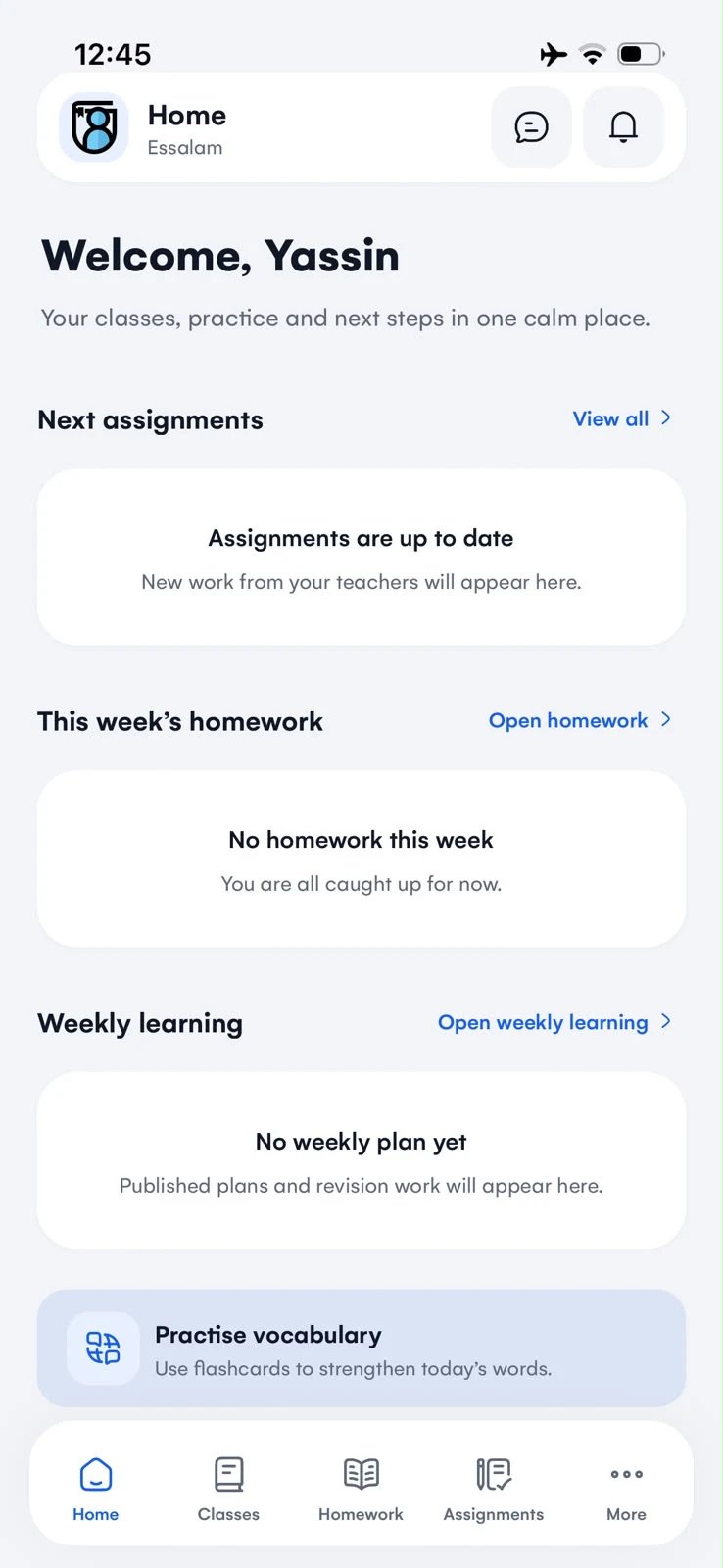
A student
The role the app is built around. Everything a student is expected to keep track of, in one place they already carry.
- Courses and material from every class they take
- Homework, with what is due and when
- Events and the school calendar
- Messages from their teachers
- Their own progress across exams, memorisation and level
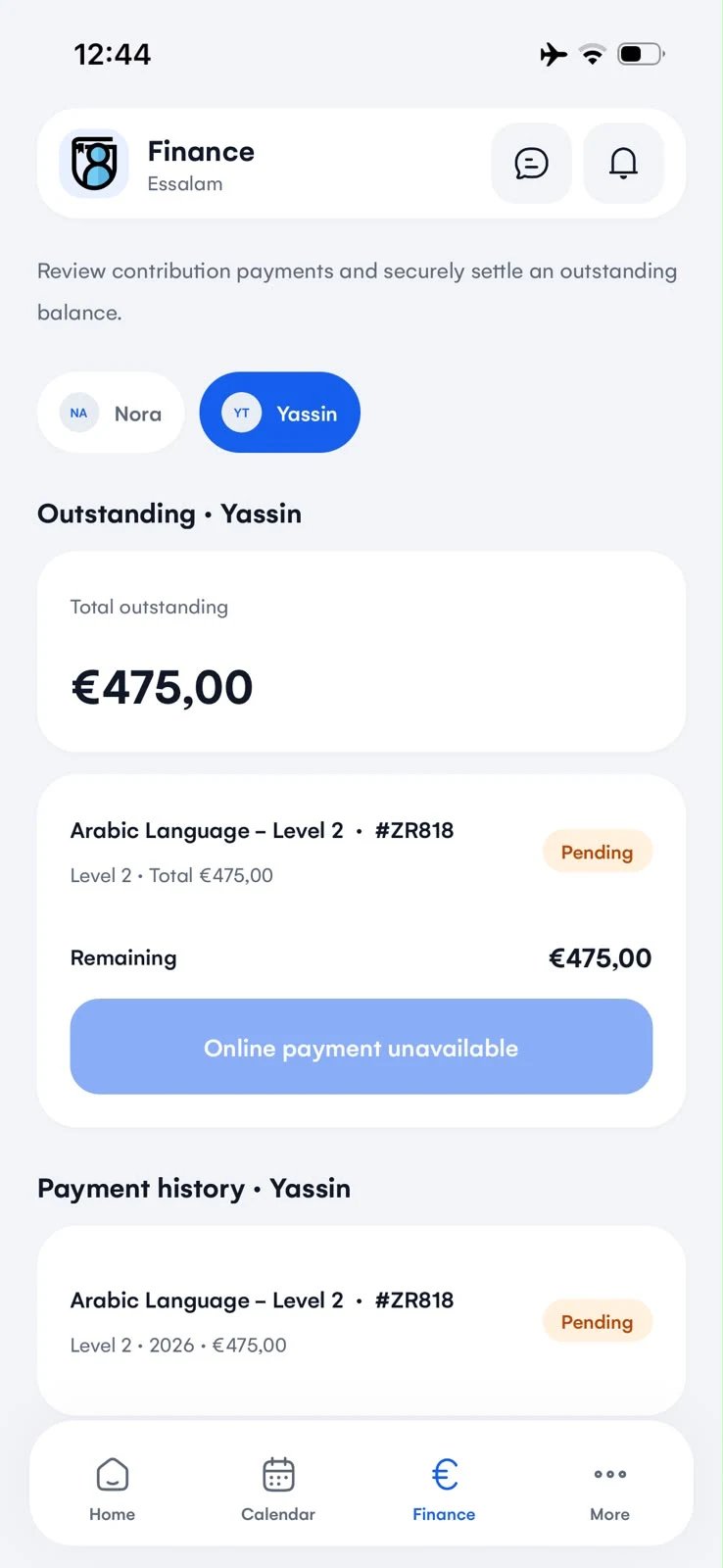
A parent
Every one of their children in one account, and answers they no longer have to phone the office for.
- Payments, what has been paid in part, and what is still outstanding
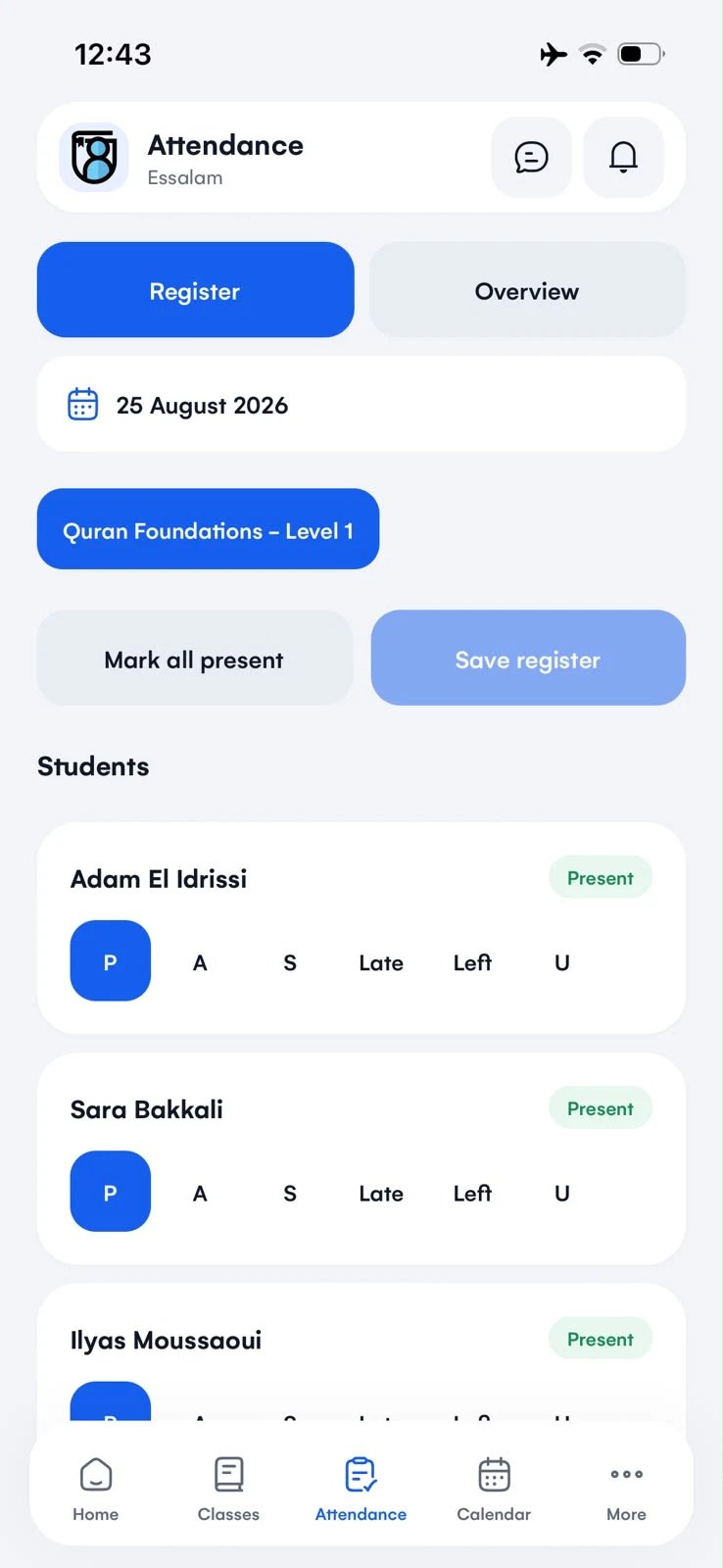
- Each child’s profile, performance and attendance
- The calendar of what is coming
- A direct line to their child’s teacher
- Notifications when something changes
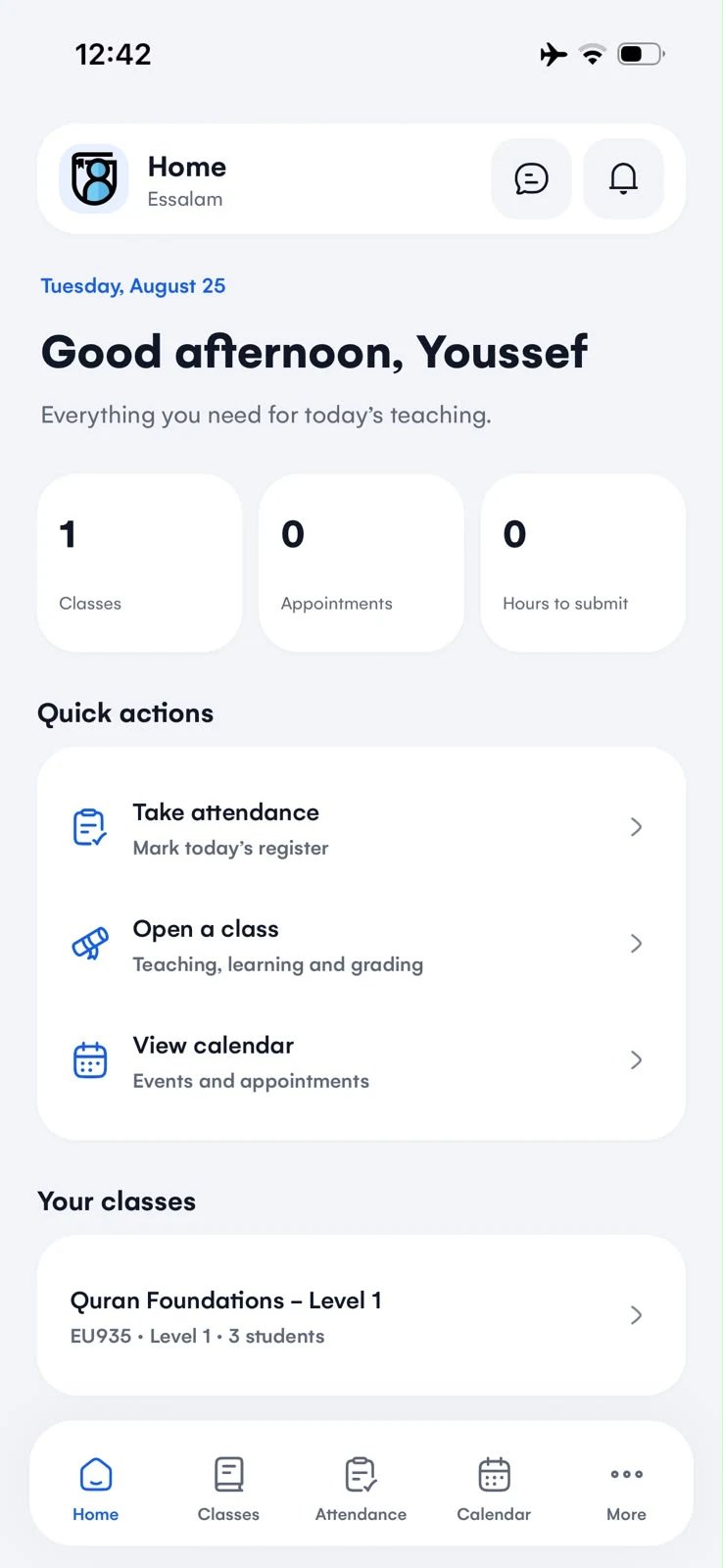
A teacher
Their classes and their students, plus the conversations that used to be spread across personal phones.
- The classes and student lists that are theirs
- Course material and homework out to a whole class
- Attendance for the sessions they teach
- Group conversations with colleagues and with parents
- The events that affect their classes
An administrator
Control over all of it, from one place, as the school grows.
- Users, roles and permissions
- Classes, subjects and enrolment
- Financial oversight and payment tracking
- Appointments and the school calendar
- What each of the other three roles can see
The result
- Parents follow payments, performance, attendance and the school calendar themselves, instead of asking the office
- Teachers reach their classes and their students’ parents in one place, rather than across personal phones and separate channels
- Students carry their courses, homework, events and progress with them, across every class they take
- Information is entered once and reaches everyone it concerns, so the office stops relaying it by hand
- Administrators keep users, roles and permissions under control from one place as the school grows
Related case
 One dashboard for the whole school, from attendance to payments
Have a similar problem to solve?
Tell us what your team does by hand today and we'll map the most practical next step.
Book a discovery call